A first version needs a clear scope.
Decide what the first release should do, then build the core journey around the people who will use it.
For founders & small teams
Build your first release, improve existing software or connect workflows with AI. Work directly with the founders building it.
Bring an idea, a brief or the product you want to improve.
01 / YOUR STARTING POINT
Start with the work in front of you. We can help define the first release, deliver a focused improvement or connect a repeated workflow.
Decide what the first release should do, then build the core journey around the people who will use it.
Add a useful feature, address a fragile journey or make the next change easier to deliver.
Connect the relevant tools and evaluate which steps can be automated or assisted by AI.
02 / SELECTED EXPERIENCE
A closer look at the problems our founders have worked on, what they built and the decisions behind it.
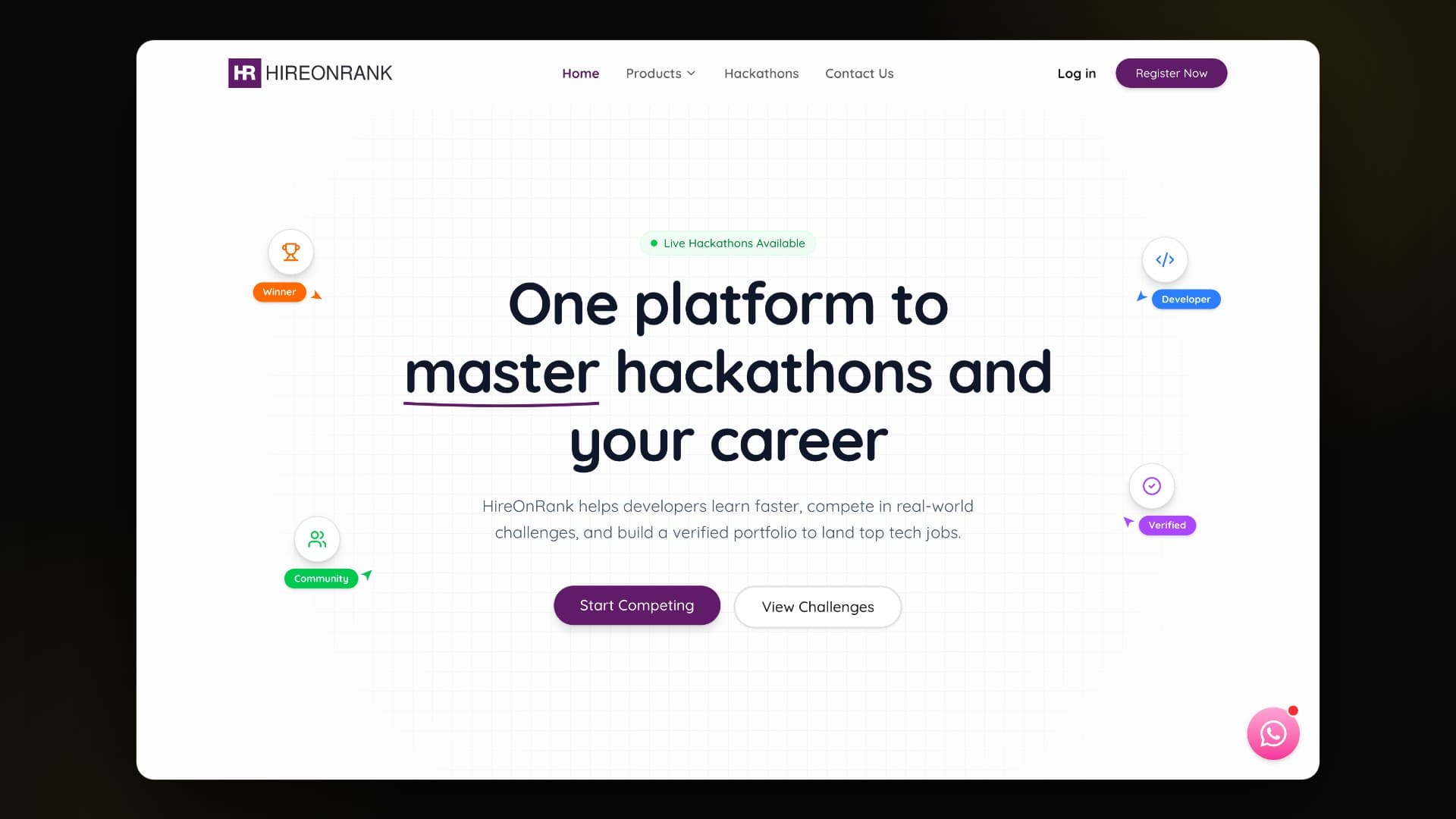 PLATFORM ENGINEERING
Hire-on-Rank
Lead full-stack engineer · Dotcode Solutions
A competition-based hiring platform with weighted judging, rankings and a submission trail that flags late GitHub commits.
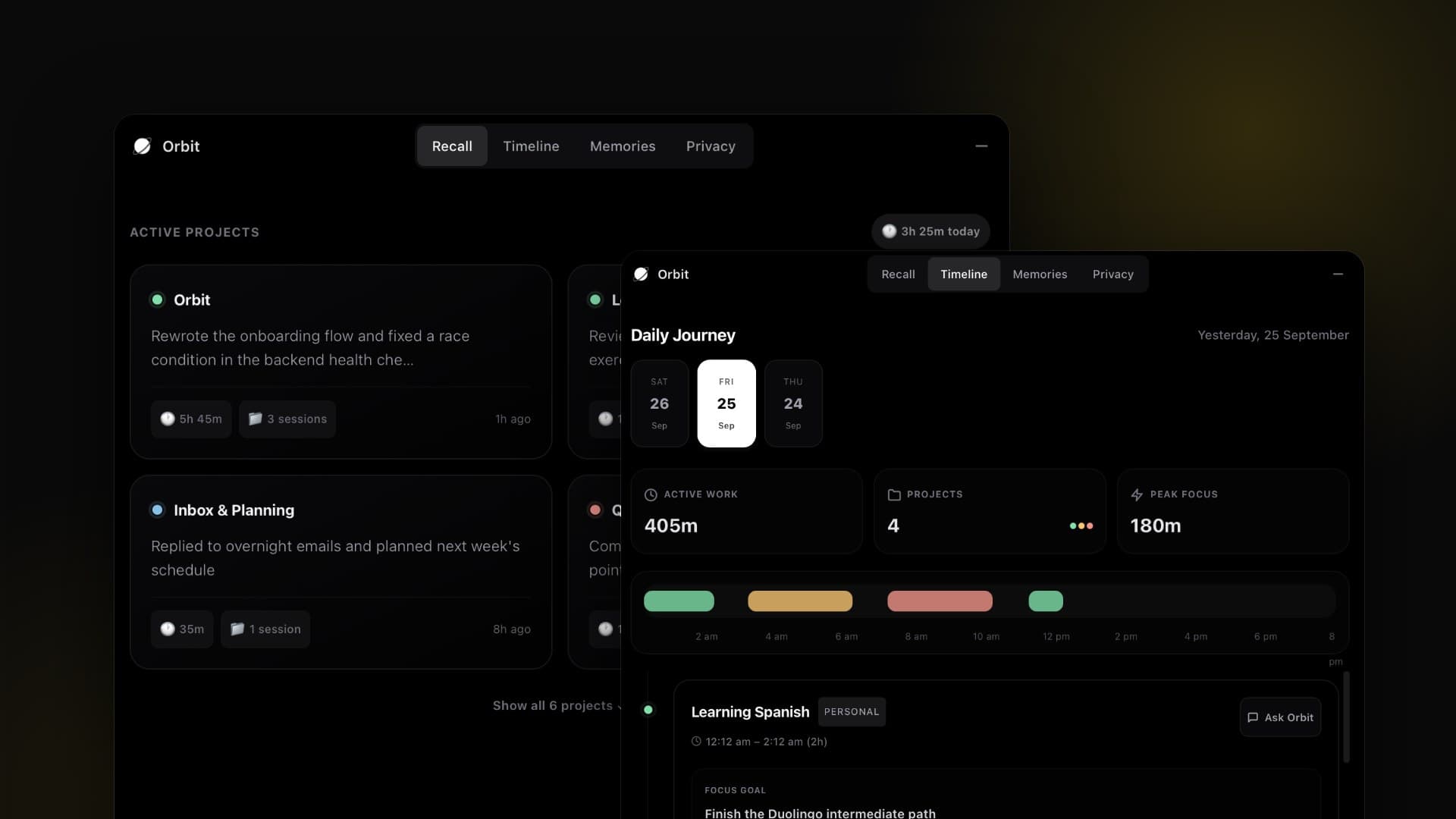 DESKTOP PRODUCT / AI
A macOS companion bringing work context, a local timeline and optional AI recall together. An open-source MVP, currently on hold.
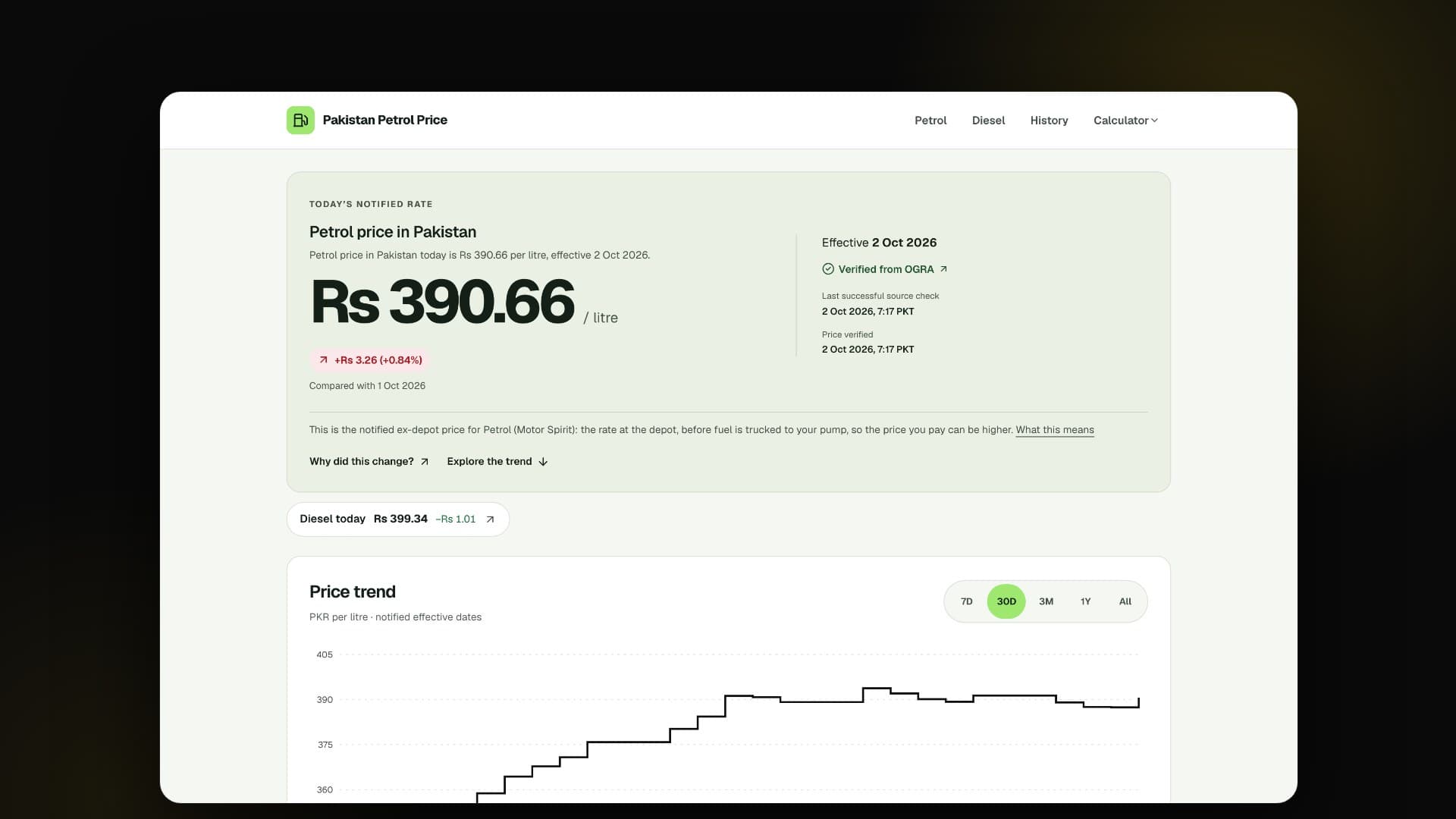 WEB PRODUCT / DATA
Pakistan Petrol Prices
Independent product · Full-stack development
A fuel-price product combining source-linked prices, historical data and calculators for monthly costs and fuel claims.
Selected work by our founders, across previous roles and independent projects.
Discuss your project03 / HOW WE CAN HELP
A first release, a focused improvement or a connected workflow. Find the starting point that fits your project.
01 / THE ENGAGEMENT
Turn your idea into a usable first release. Build the core journey, connect the essential services and review progress as the product takes shape.
What we can deliver
Start with the user journey. Build the interface and connect the systems it needs.
02 / THE ENGAGEMENT
Get your product moving again. Add a needed feature, fix a fragile journey or make the next release easier, while keeping the parts that work.
What we can deliver
Keep what works. Investigate one area, make the change and review the affected journey.
03 / THE ENGAGEMENT
Give your team fewer manual handoffs. Connect the tools you already use and add AI where it helps, with review and fallback built into the workflow.
What we can deliver
Move information between tools, with validation, optional AI and a clear review point.
We work with your current systems and choose new technology where the project needs it.
Already have a product or preferred stack? We’ll review your systems and confirm how we can work with them. Our experience spans web, mobile and desktop products, APIs, data and AI.
Selected technologies from founder work
04 / THE FIRST COMMITMENT
Bring the idea or the product you have. We’ll help identify the first milestone worth building and what needs to be answered before it.
The work is clear
A scoped release with milestones you can review.
Important questions remain
A focused assessment with findings and a practical plan.
A journey needs testing
A working prototype to explore the critical path.
You get a clear proposal before any work starts. Larger projects can be delivered in agreed phases.
05 / PROCESS & OWNERSHIP
A visible path from an agreed scope to working software and a considered handover.
Define users, the first journey, inputs, dependencies, responsibilities and acceptance. Decide what is included and what waits.
Inspect an agreed increment, give feedback and record changes. Review software you can use, alongside the important decisions behind it.
Validate relevant behavior and resolve release blockers against the scope. Include the failure states and permissions the agreed journey needs.
Transfer the agreed code, accounts and documentation. Confirm who will operate the product and what any ongoing support includes.
06 / THE PEOPLE BEHIND THE WORK
Work directly with Saadaan and Taimoor, from the first conversation to the decisions behind your software.

Co-founder · Product engineer
Builds the journeys your users need, connecting product interfaces, APIs and business workflows.
Connect on LinkedIn
Co-founder · Software & AI engineer
Connects software with AI and document search, helping teams find information and use it in their workflows.
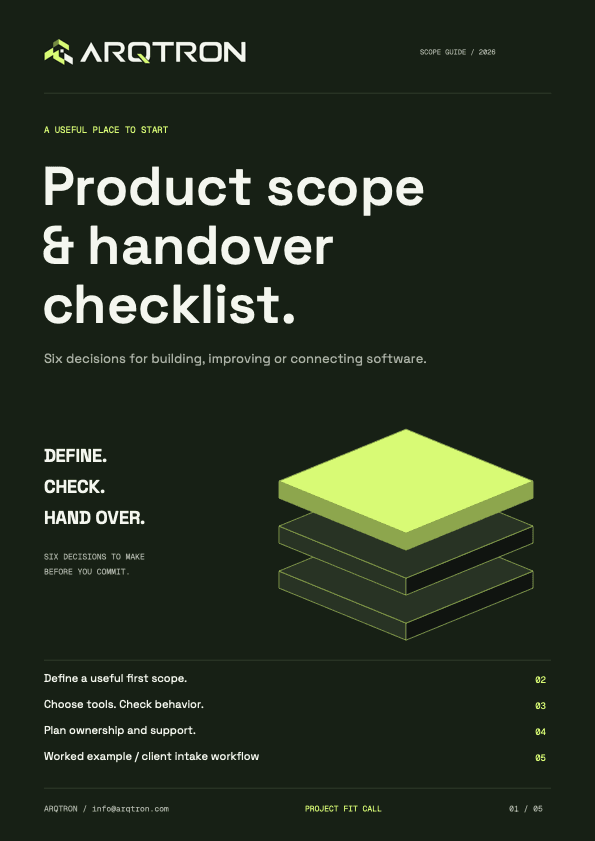
Connect on LinkedInPROJECT PLANNING GUIDE
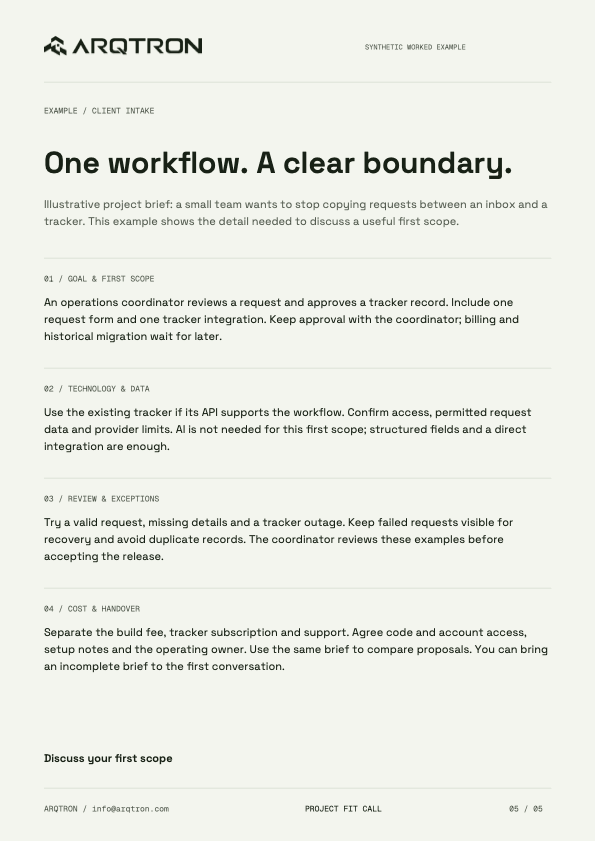
Six decisions for your next software project: scope, technology, reviews, ownership and ongoing costs. Includes practical examples and a complete sample brief.
07 / BEFORE WE START
Scope, cost, ownership and the first conversation.
We review the relevant product, constraints and responsibilities first, then agree the area we will deliver. Existing software can be improved without an automatic rebuild.
Yes. An assessment gives you findings and a plan; a prototype lets you try a critical journey. The initial conversation is about fit. An assessment or prototype is a separately priced engagement, with outputs and a fee agreed before you decide. A prototype helps test an idea; preparing it for production is a separate scope.
We price a defined scope and set out the fee, milestones and expected third-party costs in the proposal. If an assessment is needed before a build quote, its fee and outputs are agreed separately. You decide whether to proceed before work starts.
Your proposal includes milestones based on the scope, required access and review availability. We confirm delivery capacity before agreeing a start date. Larger projects can be delivered in phases, with a clear first milestone.
The proposal sets out code ownership, licensing, repository and account access, and the documentation you receive. We also agree who operates the software and what support is included or separately priced, so those responsibilities are clear before work starts.
We use AI where it helps the task. For AI features, we agree what data can be used, check representative examples and plan human review or a fallback where needed. We explain relevant AI use and remain responsible for the engineering.
A short description, who will use the software and a useful outcome. A product, brief or design link helps, but a technical specification is not required for the first conversation.
08 / YOUR NEXT STEP
Tell us about the idea, product or workflow. We will review the fit and discuss a useful first scope.
WHAT HAPPENS NEXT
Send a brief or book a call—choose the route that suits you. You do not need to do both.
PREFER A CONVERSATION?
Talk through the project and decide whether an implementation scope, assessment or prototype makes sense. Detailed investigation is agreed separately.
Booking provided by Cal.com. Calendar unavailable? Open booking in a new tab or email us.